What it looks like
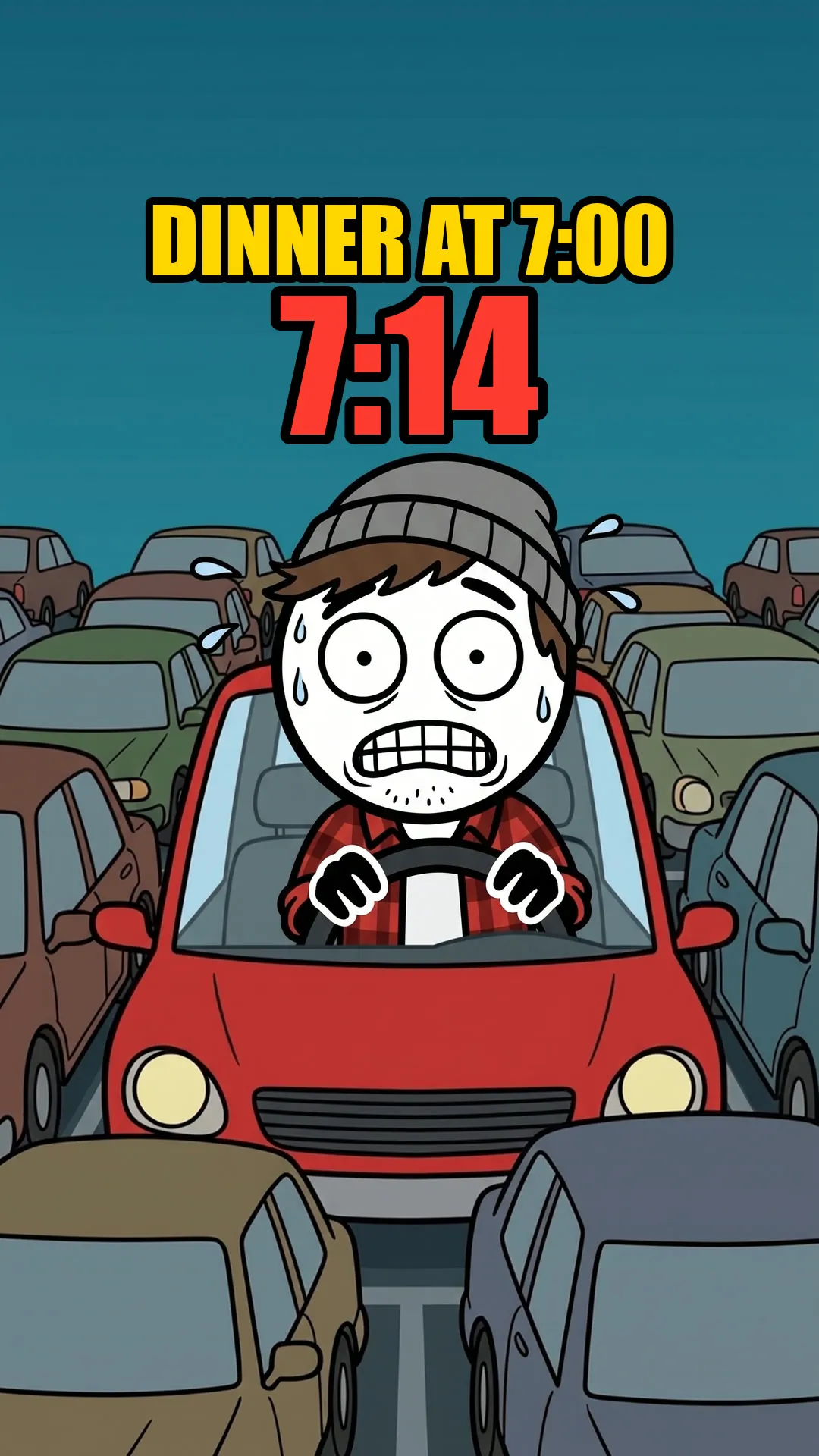
Dinner is at 7:00. It is 6:50, and Milo is leaning by the front door, spinning his keys. No hurry. His brain has done the math: ten-minute drive, plenty of time.
At 7:14 he is in a full parking lot, rehearsing an apology.
He leaves at 6:50 for a 7:00 dinner, and he is late every single time. It never feels like a pattern from the inside. It feels like bad luck with traffic.
Why it happens
The ten minutes is real. That is the drive on a good day.
What Milo’s brain leaves out is everything around the drive: finding the keys, putting on shoes, walking to the car, finding a parking spot, walking in. He counts the driving, never the leaving.
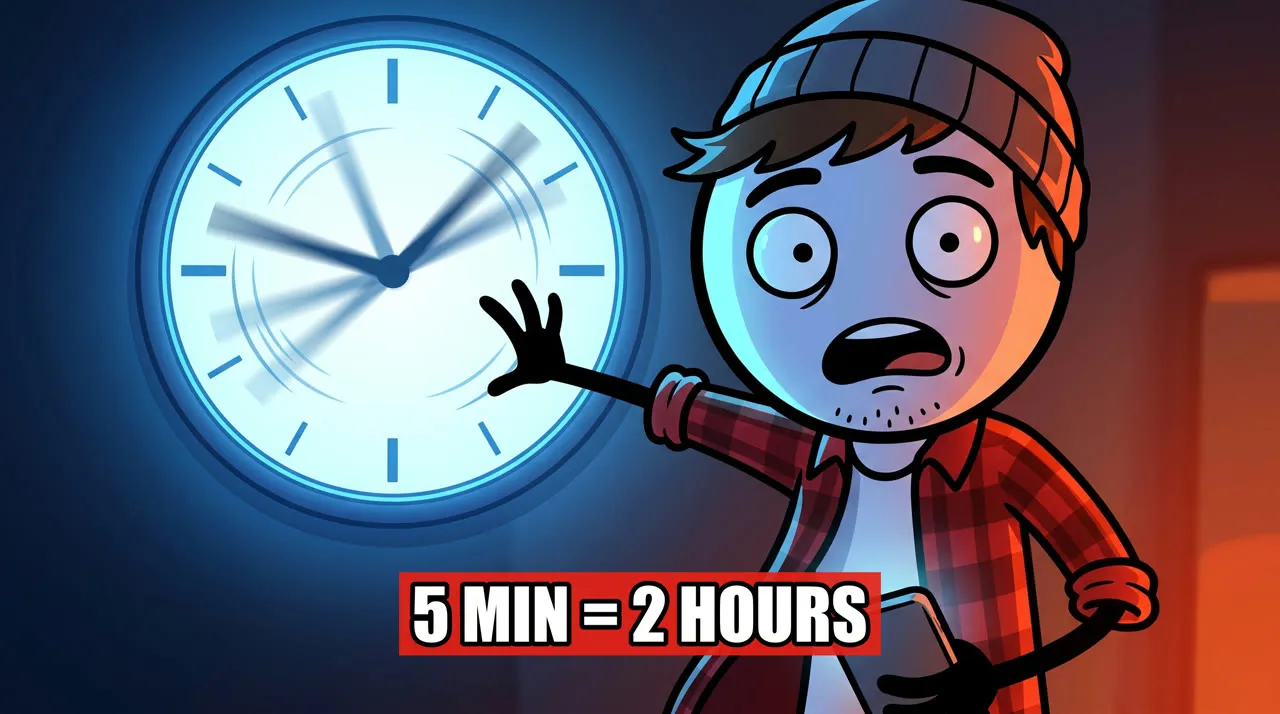
This is time blindness. For Milo, time comes in two flavors: now and not now. The drive is the part he can picture, so it gets a number. The rest does not feel like time until it is already happening.
Whatever number your brain says, double it.
The stupid-small fix
Ten-minute drive? Leave twenty minutes before. No route planning and no spreadsheet. One rule, used every time, so there is nothing to decide at the door.
Doubling works because it does not ask the silent clock to get better at estimating. It takes the estimate as it is and corrects it on the way out.
Milo leaves at 6:40. He parks, walks in, and he is the first one at the table. Small win.
If doubling still makes you late
Change the question. Stop asking “how long is the drive?” and ask “what time do I lock the door?” Then set an alarm for that time, named “door”. Arriving early is allowed. Bring something small to do while you wait.
Common questions
Won’t I end up early all the time?
Sometimes. Early with a podcast in the car beats late with an apology. After a few trips you will see your real numbers, and you can trim from there.
Why doesn’t my map app’s estimate help?
It counts the driving and nothing else. The keys, the shoes and the parking are your part, and they are the part that goes missing.
Is being late a sign of not caring?
No. Milo cares a lot. That is why he rehearses the apology. The problem is the estimate, not the effort.
Read more
- Scene 4 of A day with ADHD time blindness.
- Why 20 minutes becomes 2: the morning version of the same blind spot.
- Background: ADHD time blindness: research, signs and coping tips (Medical News Today, medically reviewed).
- Pick one place you need to be this week.
- Ask your brain how long it takes to get there.
- Double the answer and set an alarm for that time.
Start stupid small: double one number.
This is educational content, not medical advice. For diagnosis or treatment, talk to a healthcare professional.