What it looks like
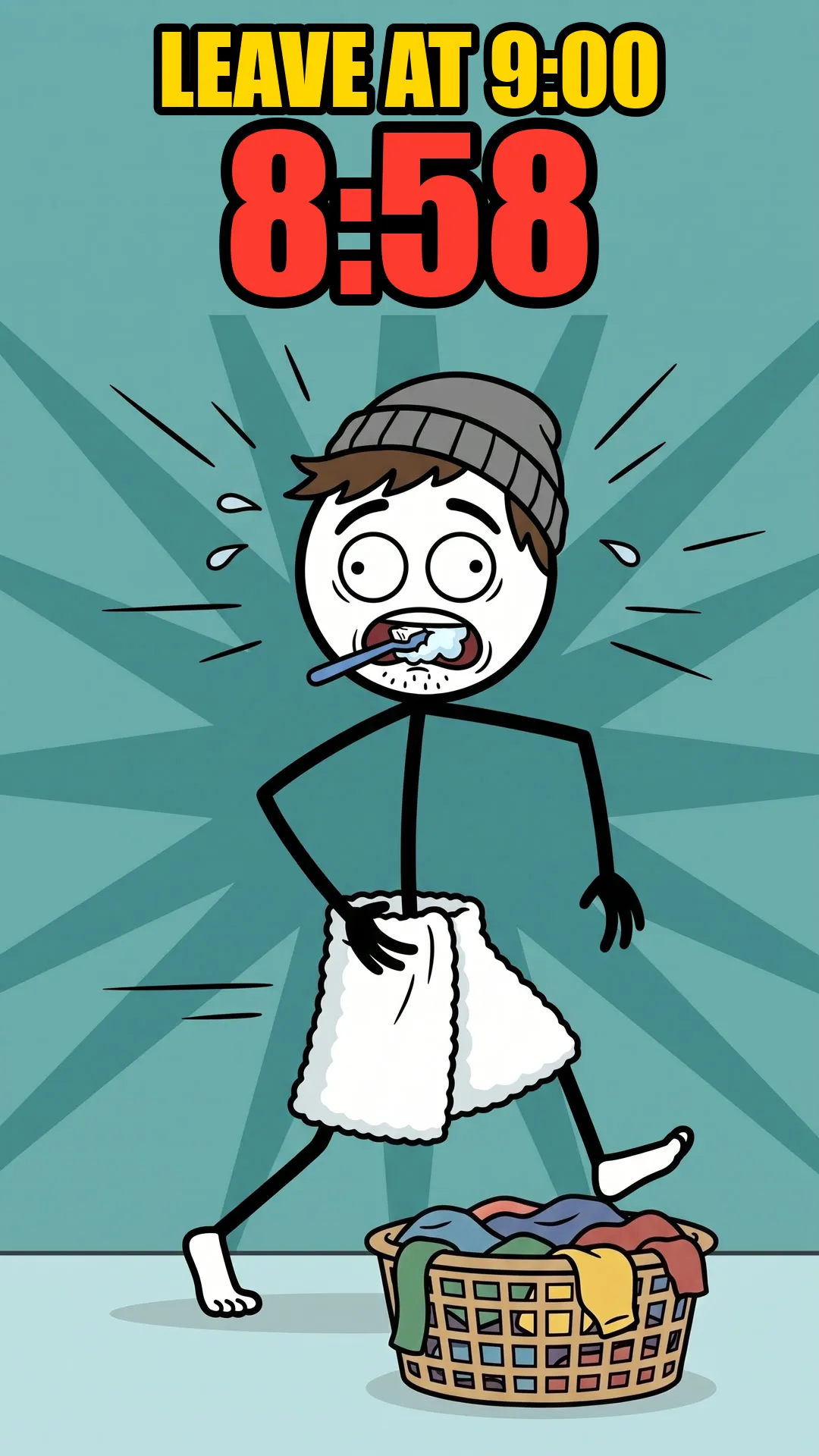
It is 8:40. Milo leaves at 9:00, so he starts the laundry. At 8:58 he is still in a towel.
At 10:00 he sits down to wait for a 3:00 appointment, and cannot start anything for five hours.
At 4:30 he picks up his phone for five minutes. When he looks up, it is dark outside.
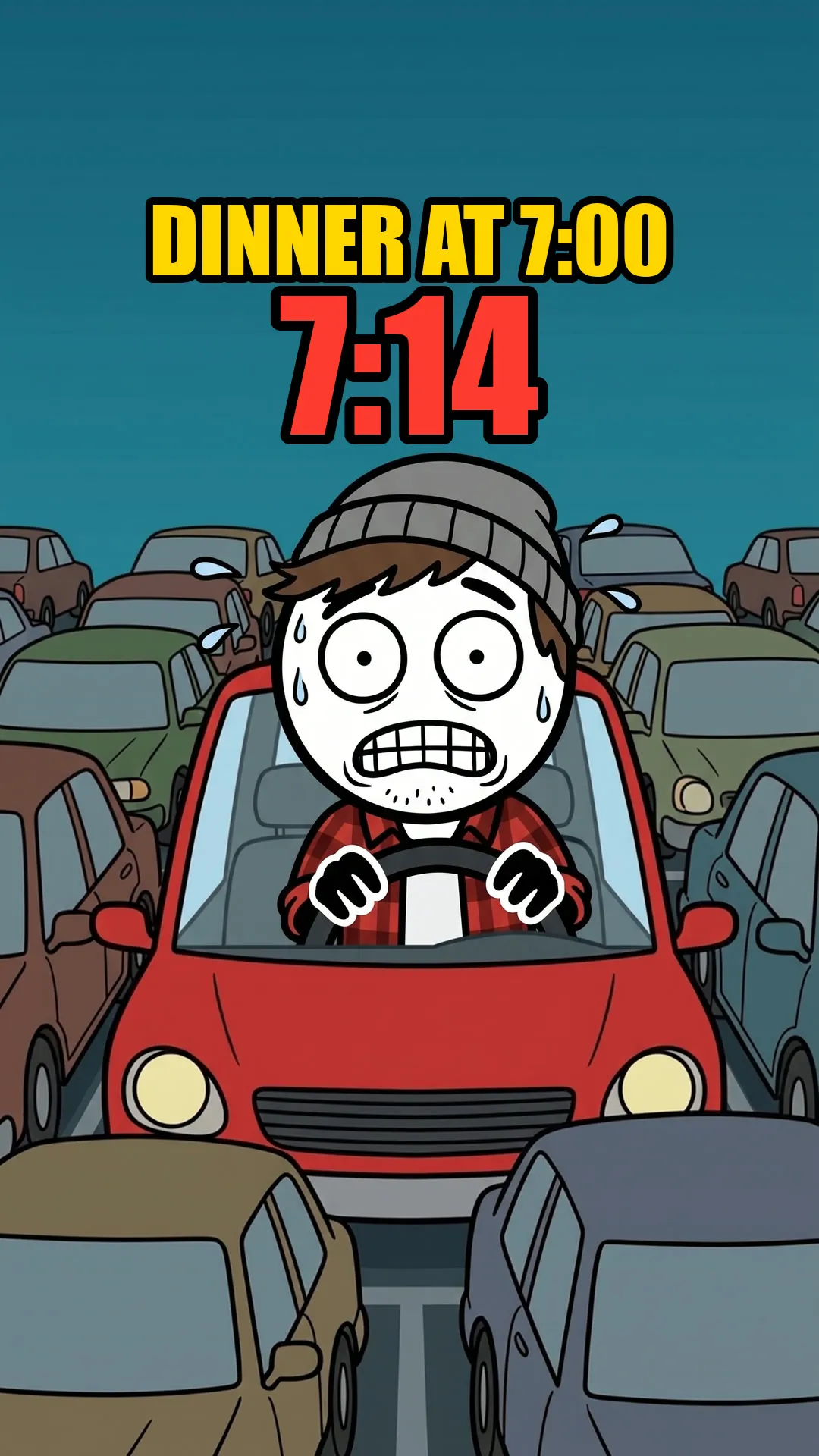
At 6:50 he leaves for a 7:00 dinner, because it is a ten-minute drive. At 7:14 he is still looking for parking.
At 11:58 he opens the file that is due at midnight. He had seven days.
Five moments in one ordinary day. Milo is not lazy, and he is not careless. He cares about every one of them.
Why it happens
All five have the same cause. This is time blindness. It is a real ADHD trait, not a discipline problem.
Most people feel time passing, like a quiet clock in the background. Milo’s clock is silent. So his brain sorts everything into two piles: now, and not now.
That one sorting rule explains the whole day. Twenty minutes before leaving looks like free time, because he sees the gap and not what has to fit inside it. A 3:00 appointment has to be guarded all day, because he cannot trust himself to notice 3:00 arriving. The phone is now, and everything else is not now. The drive is ten minutes, and the keys, the shoes and the parking do not feel like time at all. A deadline next week is not small. It is invisible, right up until it is now.
Stop trying to feel time. Put it outside your head.
The stupid-small fixes
Willpower cannot fix a silent clock. A loud one can. Each moment gets one fix, small enough to feel slightly ridiculous.
8:40 AM: name the alarm
Count backward from the door. Leaving at 9:00 means shoes on at 8:50. Set one alarm for 8:50 and name it for the action: “Shoes”. Scene 1: the laundry
10:00 AM: let the clock stand guard
Set two alarms, one for get ready and one for leave. Until the first one rings, the day is yours. Scene 2: waiting mode
4:30 PM: timer first
Set a timer before you unlock the phone, and make it loud. It does the one job the silent clock skips: it reports that time has passed. Scene 3: just five minutes
6:50 PM: double the drive
Stop asking how long the drive is. Ask what time you lock the door. Then double your first guess. Scene 4: the 10-minute drive
11:58 PM: open the file today
Open the file. Type one ugly line. Close it. Tomorrow you are not starting. You are continuing. Scene 5: the deadline
Do not try all five. Pick the one that cost you the most this week, and use it once.
Small win.
- Pick the one moment below that cost you the most this week.
- Use only that moment's fix, once, today.
- Leave the other four alone for now.
Start stupid small: pick one.
This is educational content, not medical advice. For diagnosis or treatment, talk to a healthcare professional.