What it looks like
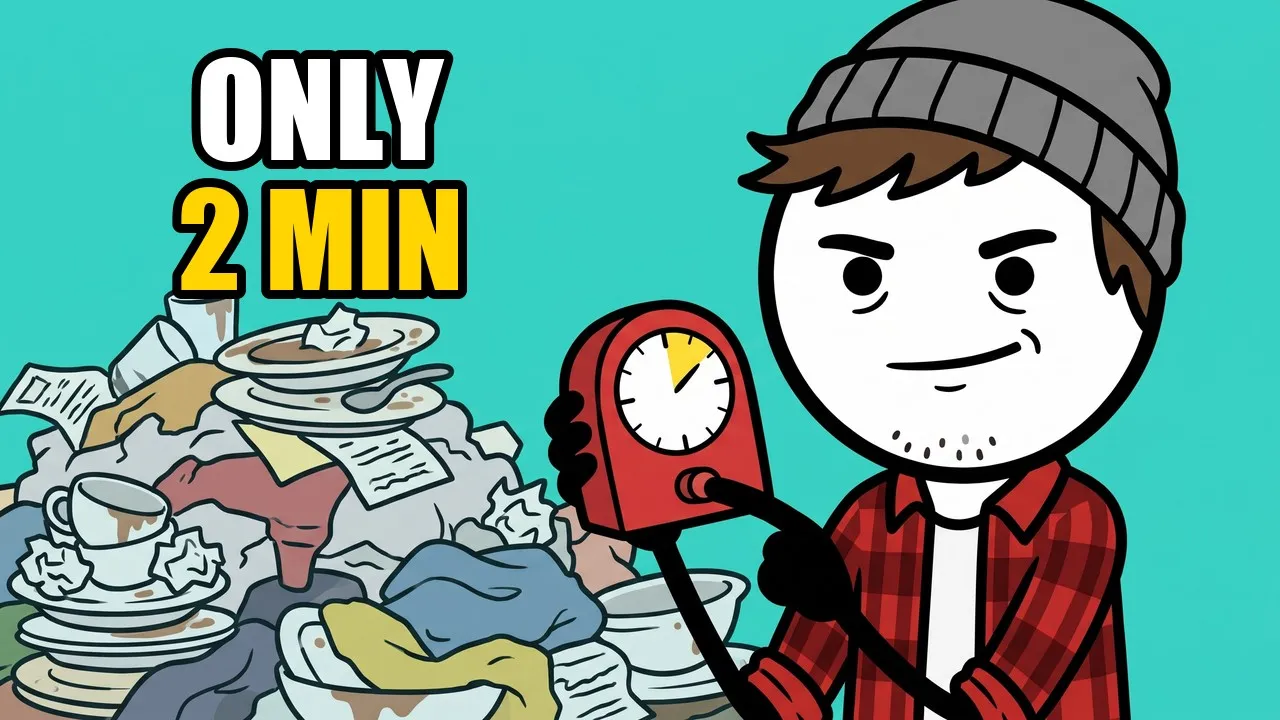
This is Milo. He has one big task due tomorrow, and a brain with 47 open tabs.
He sits down to start. The task sits there like a boulder. A squirrel runs past the window. Ooh, squirrel.
Why it happens
Big, vague tasks are kryptonite for an ADHD brain.
“Write the report” is not one thing to do. It is twenty things wearing a trench coat, and none of them says where to begin. With no clear first move, starting feels impossible. Distraction, on the other hand, is instant.
Milo is not avoiding the work because he does not care. There is simply nothing in front of him small enough to pick up.
Not “write the report”. Just “open the document”.
The stupid-small fix
Break the monster into tiny pieces.
Not “write the report”. Just “open the document”. That is the whole task.
Then the next piece: write the title. Then one sentence.
Every tiny finish gives his brain a small reward, and that makes the next piece easier to pick up. One tiny task rolls into the next. Ten minutes later Milo is not stuck anymore. He is on a roll.
Small win.
If the first piece still feels too big
Shrink it again. “Open the document” can become “open the laptop”. The test is simple: if you are still not starting, the piece is still too big. Keep cutting until it sounds a little silly.
Common questions
How small is small enough?
Small enough that you could do it in under two minutes without thinking about how. If you have to plan it, it is not small yet.
Do I have to break the whole task down first?
No. That is a big task of its own. Find the first piece only. The second one is easier to see once you have started.
What if I stop after the tiny piece?
Then you did the tiny piece, which is more than nothing. Tomorrow you are continuing, not starting.
Read more
- The 2-minute rule: your brain just hates starting: the same idea with a timer.
- Why you only start at 11:58 PM: one line today beats a panic at midnight.
- Background: ADHD skills: getting started (University of Minnesota).
- Pick the thing you are avoiding.
- Cut off its first two-minute piece. Make it so small it sounds silly.
- Do only that piece. Then decide whether to do the next one.
Start stupid small: open the document.
This is educational content, not medical advice. For diagnosis or treatment, talk to a healthcare professional.